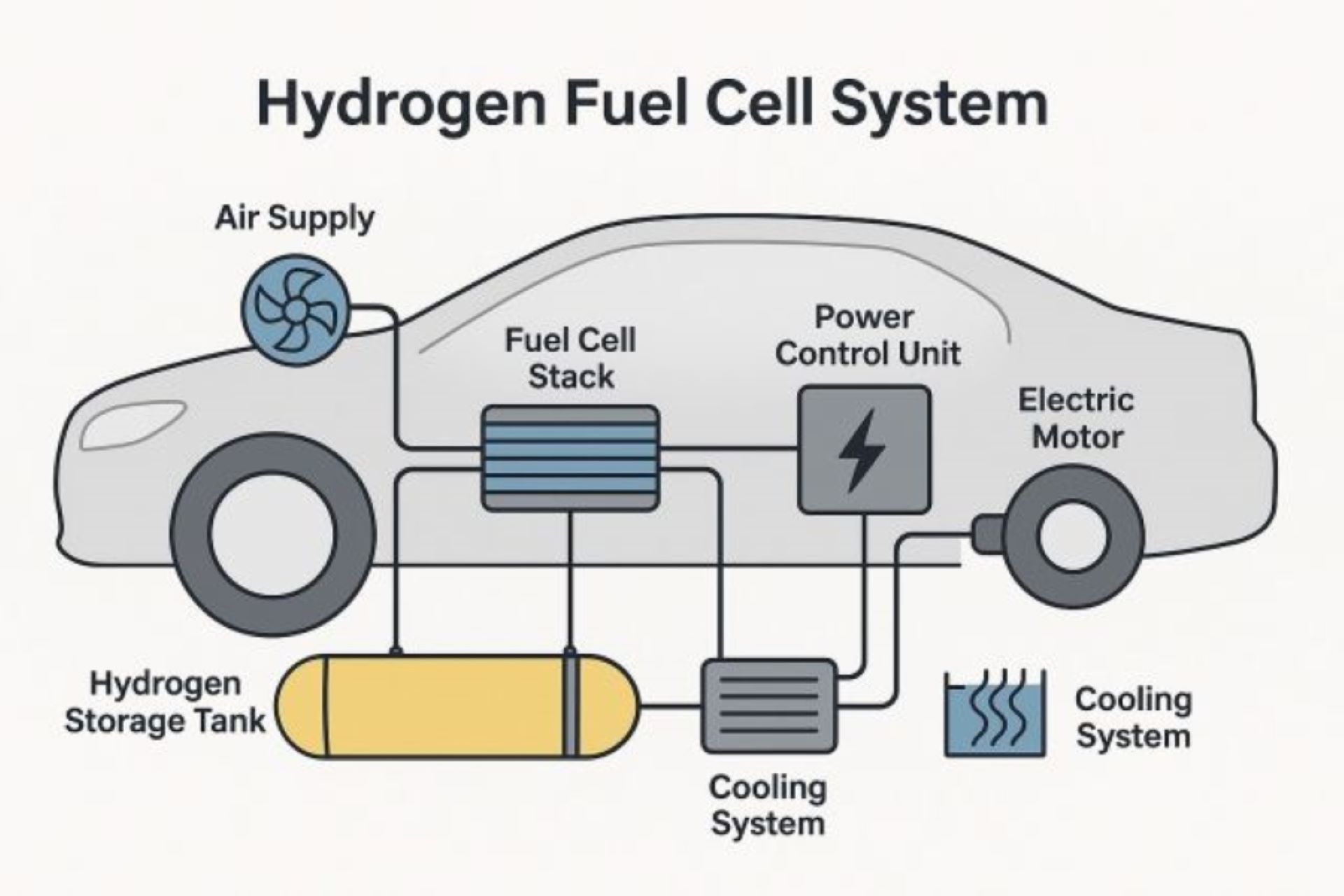
Stellantis has scrapped its hydrogen fuel cell technology development programme, citing limited refuelling infrastructure, high capital costs, and insufficient consumer incentives as key factors behind the decision.
The automotive giant will not launch its planned Pro One hydrogen-powered commercial vehicle range this year, with serial production originally scheduled for summer at facilities in Hordain, France, and Gliwice, Poland.
"In responding to demanding CO' regulations in Europe, Stellantis has decided to discontinue its hydrogen fuel cell technology development programme," said Jean- Philippe Imparato, Chief Operating Officer for Enlarged Europe. "The hydrogen market remains a niche segment with no prospects of mid-term economic sustainability. We must make clear, responsible choices to ensure competitiveness and meet customer expectations with our electric and hybrid offensive."
The decision won't affect staffing at production sites, with hydrogen-related R&D activities redirected to other projects. Stellantis has begun discussions with Symbio shareholders to evaluate market consequences and preserve mutual interests.
Despite Stellantis's withdrawal, hydrogen development continues elsewhere. Toyota and BMW are collaborating on hydrogen technology, with BMW's X5-based fuel-cell SUV delivering 295kW output and 504km range. BMW is conducting global pilot tests, including in South Africa with Sasol and Anglo-American Platinum, targeting 2028 production.
Toyota's commercially available Mirai sedan offers 500km range with minute refuelling times in Japan, the USA, and Europe. The company also has a Hilux Hydrogen prototype bakkie with 600km range using Mirai technology.
Staff Writer
Reporting from the front lines of the automotive industry, delivering expert analysis and the technical updates that drive the South African motor sector forward.
More news from OEM News