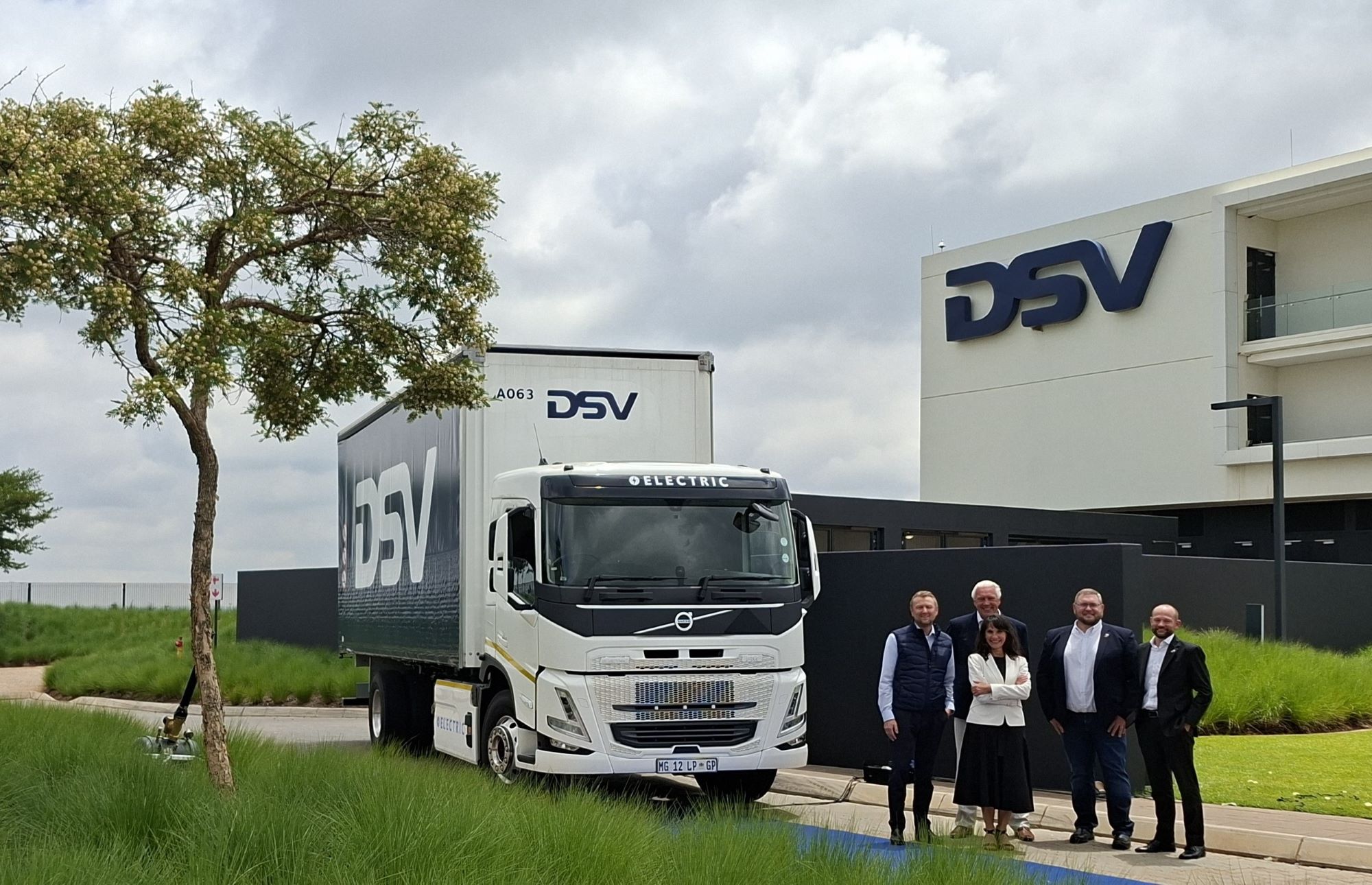
Volvo Trucks South Africa has delivered the first of nine new electric trucks that will join the local fleet of global logistics operator DSV. The addition marks a significant step in DSV’s sustainability journey in South Africa, where the company is steadily expanding its zero-emission capability.
Three Volvo FM 4x2 8-ton electric trucks will enter service within DSV’s Air and Sea division. They form part of a broader fleet transformation plan aimed at reducing emissions across road operations. By the end of 2025, five new Volvo FM 4x2 electric tractors will be introduced as well, with a further unit scheduled to arrive early in 2026. The ongoing partnership between DSV and Volvo Trucks is intended to strengthen the supply of cleaner transport alternatives for customers.
This local development mirrors a wider global strategy. In 2024, DSV signed an agreement with Volvo Trucks in Europe to purchase 300 electric trucks, taking the company’s international electric fleet to around 500 vehicles. Waldemar Christensen, Managing Director of Volvo Trucks South Africa, says the collaboration demonstrates a shared commitment to sustainability. “Partnering with a global leader such as DSV on this journey is an honour and a testament to our shared commitment to shaping a cleaner, more sustainable future for transport.”
He adds that businesses adopting electric vehicles on a daily basis are proving the viability of low emission transport. “It is truly inspiring that global transport leaders like DSV are integrating electric trucks into their daily operations, demonstrating that sustainable transport is both practical and efficient in South Africa.”
DSV conducted extensive operational studies before committing to the new fleet. These trials showed that electric trucks perform especially well in volume-based applications, making them well suited to the company’s logistics footprint. “We are proud to unveil our first Volvo 8-ton electric truck in partnership with Volvo Trucks SA. As the first of its kind for both organisations in South Africa, it represents an important step forward in delivering on our sustainability commitments,” says Melanie Smit, Vice President Air and Sea, Sub Saharan Africa.
Operational trials revealed an average energy consumption of just over 1kWh per kilometre and a range of 230km per charge. Their efficiency, fast charging and reliability make them fit for DSV’s daily needs while reducing downtime.
Staff Writer
Reporting from the front lines of the automotive industry, delivering expert analysis and the technical updates that drive the South African motor sector forward.