After roughly a quarter-century of building dominance in electric vehicles, China’s carmakers are racing towards a new battleground: putting powerful artificial intelligence inside the car itself.
The goal is a vehicle that is not only connected, but capable of reasoning and acting on complex requests, increasingly powered by Chinese chips and software.
The drive is aligned with Beijing’s “AI Plus” agenda, set out in China’s latest five-year plan, which calls for AI to be embedded across industries from factories to healthcare. In automotive, it is also part of a broader effort to reduce reliance on high-end semiconductors, an area where U.S. export controls and global supply chains remain a strategic pressure point.
Executives and analysts increasingly describe the change as structural: the car is becoming a software platform, and manufacturers are expected to deliver frequent improvements, new services and smarter driver assistance. In that environment, the boundary between an automotive brand and a technology company is blurring quickly.
At this week’s Beijing Auto Show, that message was on display. Nissan’s China chief, Stephen Ma, argued that AI-led development cycles are now fastest in China, a reflection of intense local competition and the speed of iteration in Chinese software ecosystems.
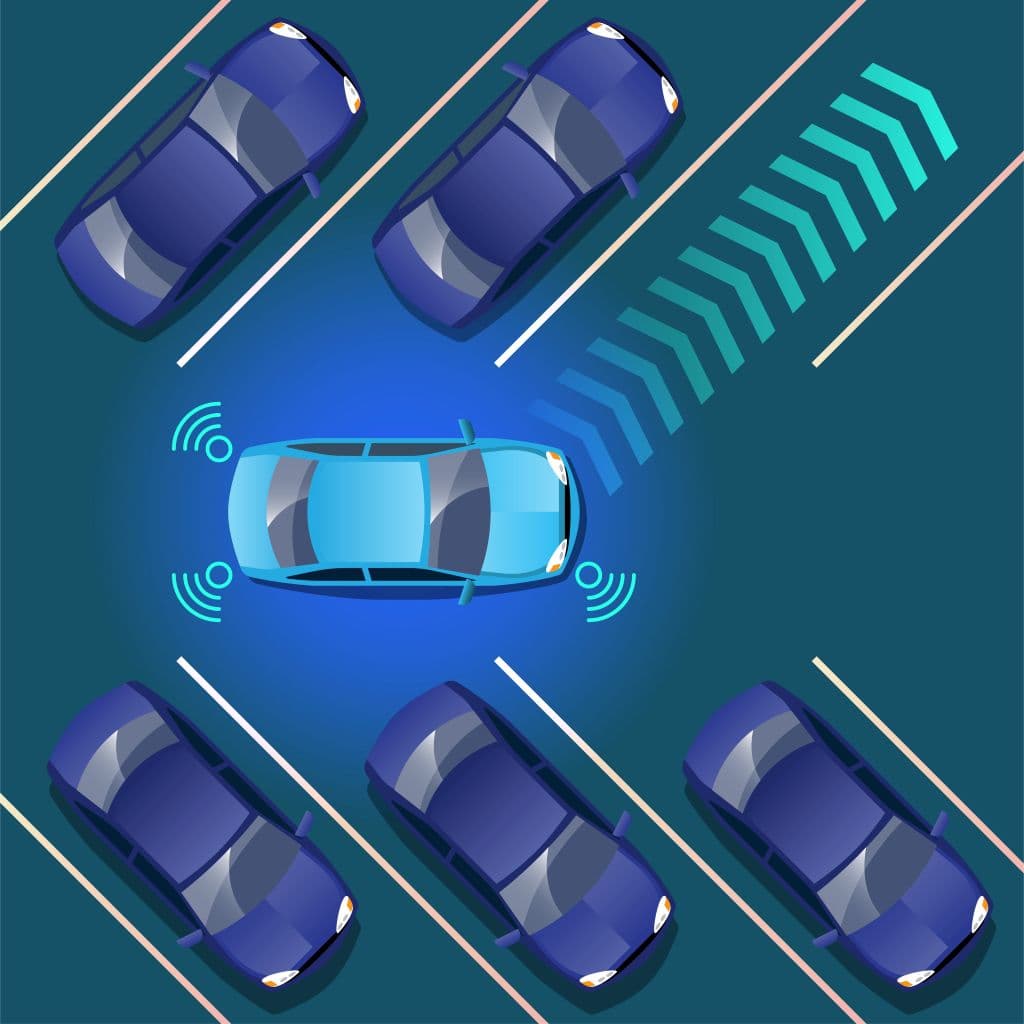
EV maker Xpeng says its latest in-car model can take higher-level instructions such as “park near the entrance” rather than forcing a driver to tap a specific bay on a map, using onboard cameras to navigate even without precise coordinates. Smartphone and appliance group Xiaomi, a newer entrant to carmaking, is promoting an updated model that lets drivers delegate tasks from the road, including compiling notes and handling everyday errands through its HyperOS system.

Behind the user-facing features is a hard-nosed industrial strategy. Huawei has said it will invest more than $10 billion over the next five years to strengthen computing power for smart driving. Meanwhile, Chinese chip suppliers such as Horizon Robotics are rolling out processors designed to fuse cockpit and driving functions, signalling a push to keep more of the “brains” of the vehicle at home.
Industry representatives say the stakes go beyond incremental convenience. As cars become agent-like machines on wheels, the winners may be those that can combine affordable EV hardware with dependable onboard intelligence, and do so at scale. For rivals in Europe, Japan and the United States, China’s next advantage may be less about batteries and more about who controls the algorithms and the silicon.
State-owned groups are also aligning themselves with the policy direction. Dongfeng Motor has said it is building vehicles using “embodied AI technology” in line with the country’s long-term plans, underscoring how central AI is becoming to industrial strategy as well as consumer products.
Its chairman, Yang Qing, framed the shift as a national priority, saying the company would respond when “the nation calls”.
Staff Writer
Reporting from the front lines of the automotive industry, delivering expert analysis and the technical updates that drive the South African motor sector forward.