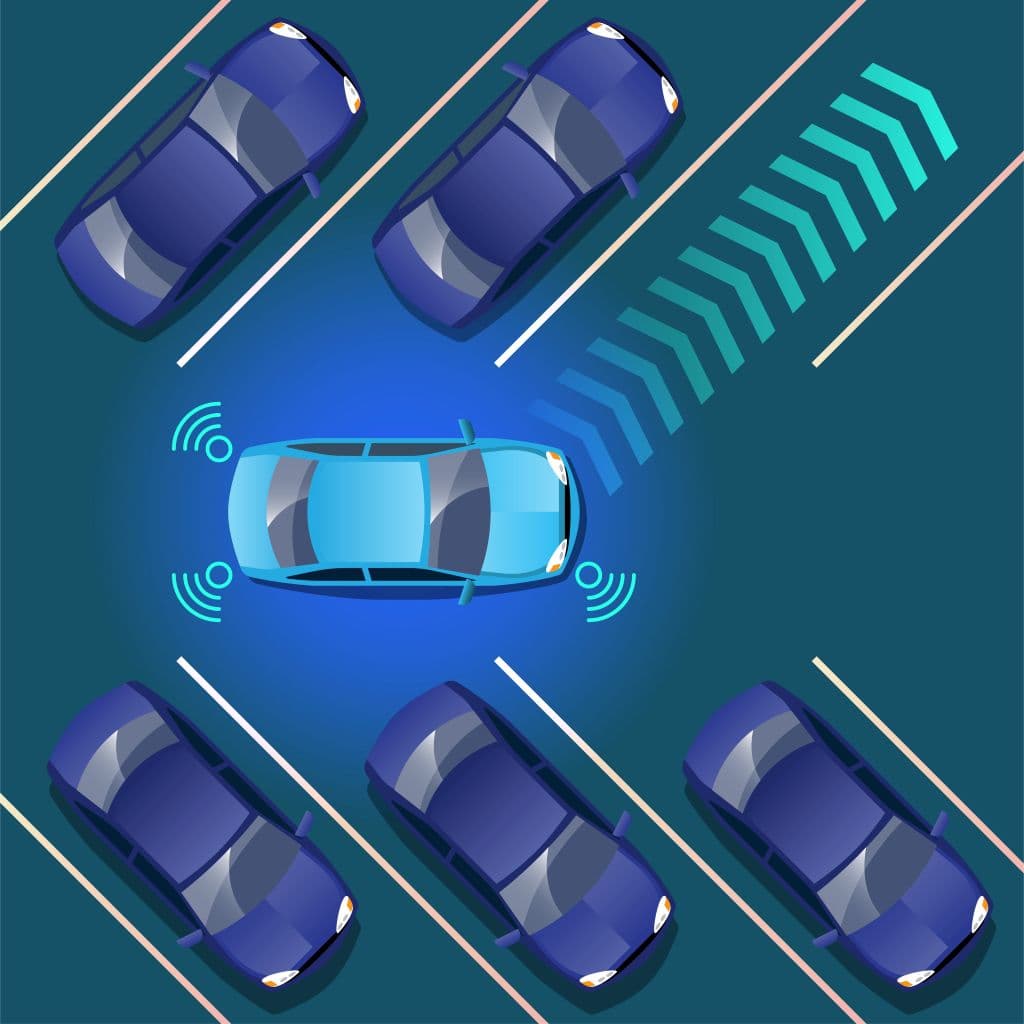
As the automotive industry moves towards software-defined vehicles, much of the discussion centres on artificial intelligence, centralised computing, vehicle operating systems and automated driving. Yet one of the clearest demonstrations of how capable these vehicles have become may take place in a far less glamorous setting: the car park.
Parking is something drivers deal with almost every day. Tight spaces, crowded shopping centres and awkward manoeuvres remain common sources of frustration. If software can make these situations easier, safer and less stressful, the benefits become immediately obvious to customers.
Today's parking assistance systems have already come a long way. Features such as Park Assist, Remote Parking and early Automated Valet Parking can simplify difficult manoeuvres, but they still generally require driver supervision. Most work best in controlled environments and are designed to assist rather than completely replace the driver.
SBD Automotive believes the next step is fundamentally different. Instead of viewing parking as a collection of driver assistance features, leading manufacturers are increasingly treating it as an intelligent software capability that can continuously improve through updates and greater computing power.
Some Chinese manufacturers are already demonstrating this direction. Huawei ADS and AITO have showcased Automated Valet Parking systems that allow drivers to stop at a designated drop-off area before the vehicle independently finds an available parking space. When the driver returns, the vehicle can be summoned back without requiring anyone to walk through the car park.
Other manufacturers are expanding parking functionality in different ways. NIO's Remote Parking allows owners to park or retrieve their vehicles using a smartphone, while Memory Parking enables a vehicle to learn frequently used parking routes, such as navigating into a home garage or workplace parking bay, before repeating them automatically.
Vehicle hardware is evolving alongside software. Technologies such as four-wheel steering and dedicated electric vehicle platforms allow vehicles to perform manoeuvres that would have been difficult or impossible only a few years ago, including crab-style movements that simplify parking in particularly tight spaces.
For manufacturers, parking provides an ideal proving ground for software-defined vehicles. It combines sensors, artificial intelligence, precise vehicle control, connectivity and over-the-air software updates, all within a slower, lower-risk environment than high-speed autonomous driving.
Advanced parking systems also create new business opportunities. Carmakers can introduce software upgrades, subscription services and future integration with charging infrastructure, parking payments and connected mobility platforms. Unlike many advanced technologies, customers can immediately appreciate the convenience these systems provide.
While the industry's attention often focuses on autonomous driving at motorway speeds, some of the most meaningful advances in software-defined vehicles may happen at walking pace. Parking could prove to be the everyday feature that demonstrates just how capable the next generation of intelligent vehicles has become.
Staff Writer
Reporting from the front lines of the automotive industry, delivering expert analysis and the technical updates that drive the South African motor sector forward.