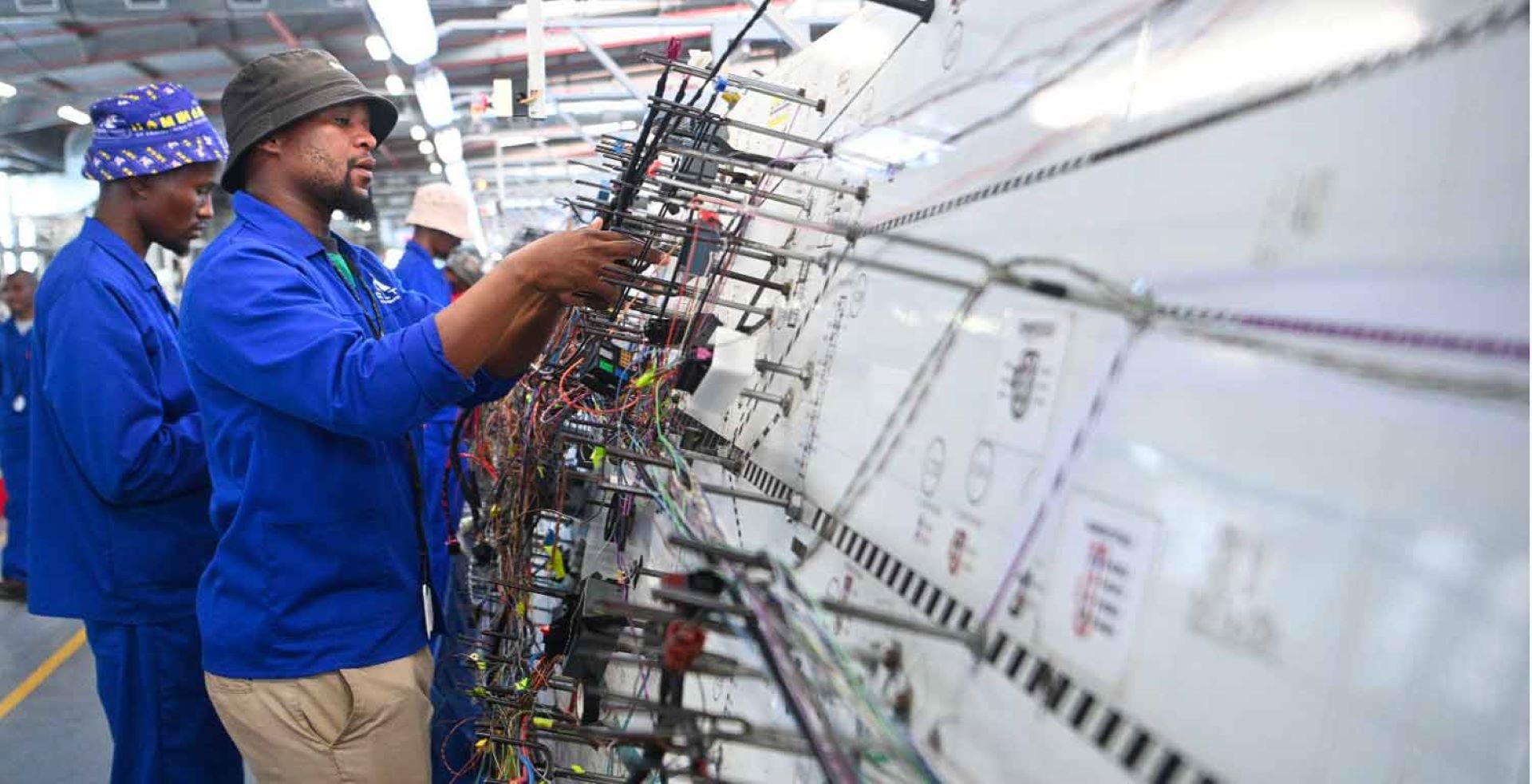
Lobatse, a town 70 km south of Gaborone, is emerging as a manufacturing hub. Delta Automotive Technologies, based in the town, produces vehicle wiring harnesses for Volkswagen and Nissan. These components, essential for transmitting electrical signals and power in vehicles, are made with precision by a growing local workforce.
Delta's operations are backed by an $80 million credit line from the African Development Bank to the Botswana Development Corporation (BDC), aimed at supporting local enterprises. The funding has enabled Delta to expand production and modernise its facilities, supplying parts for Volkswagen's Polo Vivo and Polo 270, and Nissan's H60.
Currently, Delta manufactures 120 harness sets daily for Volkswagen South Africa. By 2027, it aims to produce 340 sets for Volkswagen and 111 for Nissan. The company plans to increase its workforce from 327 to 1,000 employees, with 95% being Botswana nationals.
Women make up 75% of the workforce, an unusual figure in the traditionally male-dominated automotive sector. Employees like Clara Kaekane, a product and process engineer, highlight the shift in gender roles within manufacturing.
Delta's success reflects broader goals of the African Development Bank, particularlyits objectives to industrialise and integrate Africa. According to Moono Mupotola, Deputy Director General for Southern Africa at the Bank, the company's growth illustrates how development finance can link local economies to global value chains and provide sustainable employment.
BDC's Benedicta Abosi describes Delta as a case study in how strategic investment can yield multiple development benefits, including skills development, export growth, and economic diversification. As Delta scales up production, it serves as a model for how targeted financing can support industrial transformation across Africa.
Staff Writer
Reporting from the front lines of the automotive industry, delivering expert analysis and the technical updates that drive the South African motor sector forward.